Turning static images into moving clips used to require animation skills, complex software, and hours of manual work. In 2026, it requires a prompt and the right tool. Image-to-video AI has matured dramatically, with models now capable of realistic physics, consistent character preservation, and even synchronized audio.
After testing dozens of platforms, we’ve identified the five best image-to-video generators that deliver professional results without the production headaches. Here are your top picks for 2026.
Quick Decision Guide
| Tool | Best For | Standout Feature |
| Pollo AI | All-around versatility | Multi-model access, viral templates |
| Kling 3.0 | Narrative sequences | Multi-shot with character locking |
| Luma Ray3.14 | Production speed | Native 1080p, 4× faster |
| Runway Gen-4.5 | Creative control | Multi-shot storytelling, editing tools |
| Pika 2.5 | Physics effects | Pikaffects simulations |
1. Pollo AI
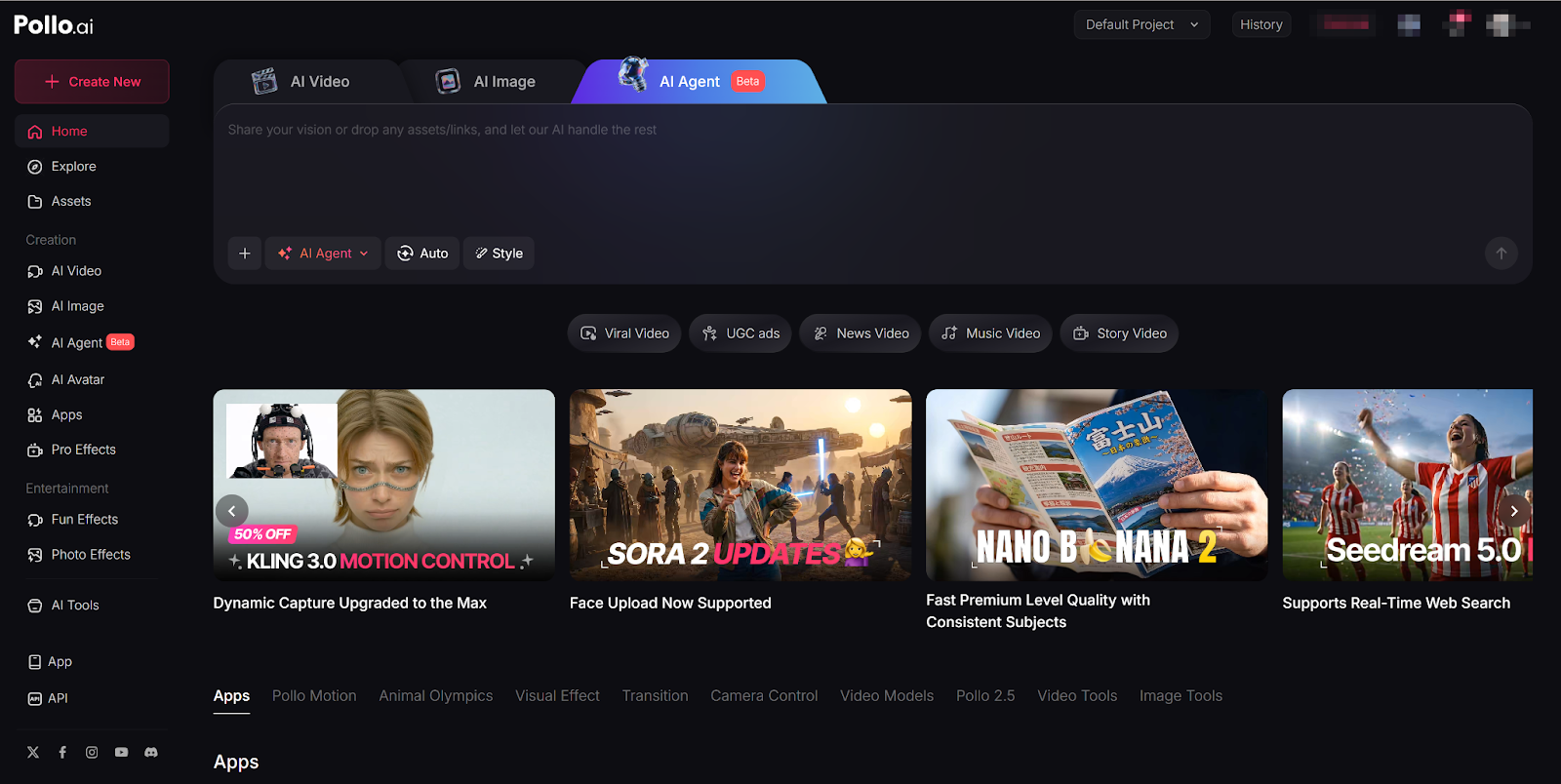
Best for: Creators who want access to multiple video models without juggling subscriptions
Pollo AI has emerged as a comprehensive powerhouse for image to video creation. What makes it unique is its role as an “aggregator” platform—instead of committing to a single engine, you access leading models like Kling AI, Luma AI, Runway, and Veo 3 all within one unified interface.
Why it wins:
- Multi-model flexibility: Test the same image across different engines to find the perfect visual style—cinematic realism with Kling, stylized animation with PixVerse, or balanced performance with Veo.
- Professional Mode: Toggle this on for significantly reduced flickering and frame-to-frame consistency. In testing, Pollo AI kept environments stable while animating subjects, avoiding the “melting background” problem common in other generators.
- Viral templates: Access hundreds of pre-designed animation styles and effects like the AI video meme maker, making your content instantly shareable.
- Mobile app: Full feature parity on iOS and Android means you can create anywhere, anytime.
Best practice: Start with a sharp, high-resolution image. Pollo AI performs significantly better at animating existing photos than hallucinating from text alone.
2. Kling AI 3.0
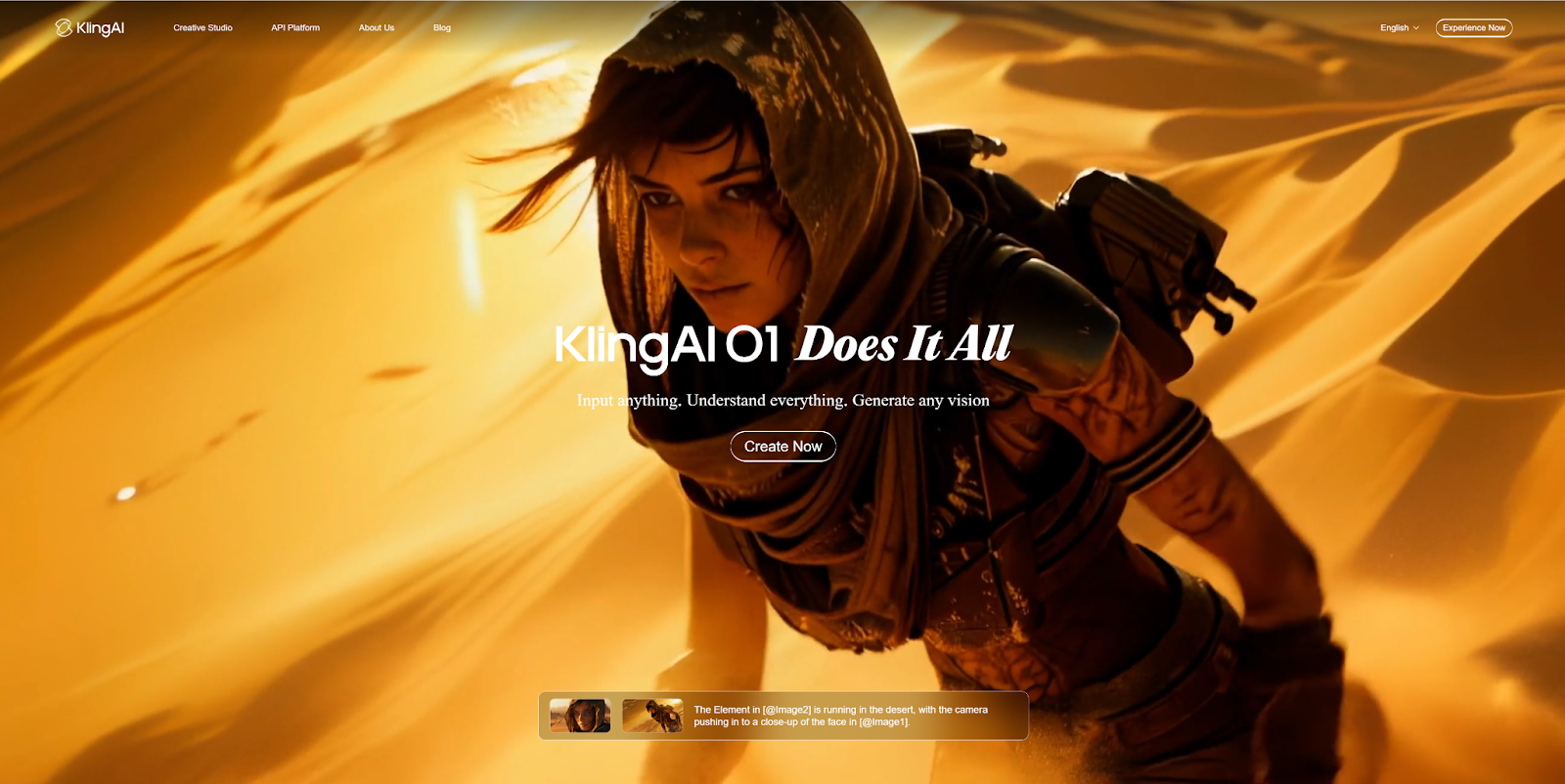
Best for: Filmmakers needing narrative control and multi-shot sequences
Kuaishou’s Kling 3.0, released in February 2026, represents a major leap in professional AI video generation. According to independent benchmarks, Kling 3.0 Pro currently holds the #1 spot in text-to-video quality with an impressive Arena ELO score of 124.
Why it wins:
- Elements 3.0 system: Upload reference images of characters or products and lock their identity across multiple shots. In testing, a hoodie with text remained perfectly consistent from wide shot to close-up.
- Multi-shot generation: Create up to 6 distinct camera cuts within a single 15-second sequence, with duration control for each shot.
- Natural movement: Unlike earlier models that felt “floaty,” Kling 3.0 produces weighted, fluid motion—a character walking down a beach looked genuinely natural.
- Kling 3 Edit: Robust video-to-video mode for style transfer and refining existing footage.
My tip: Use the multi-shot feature for storytelling. Structure your prompt like a shot list for cinematic results.
3. Luma Dream Machine
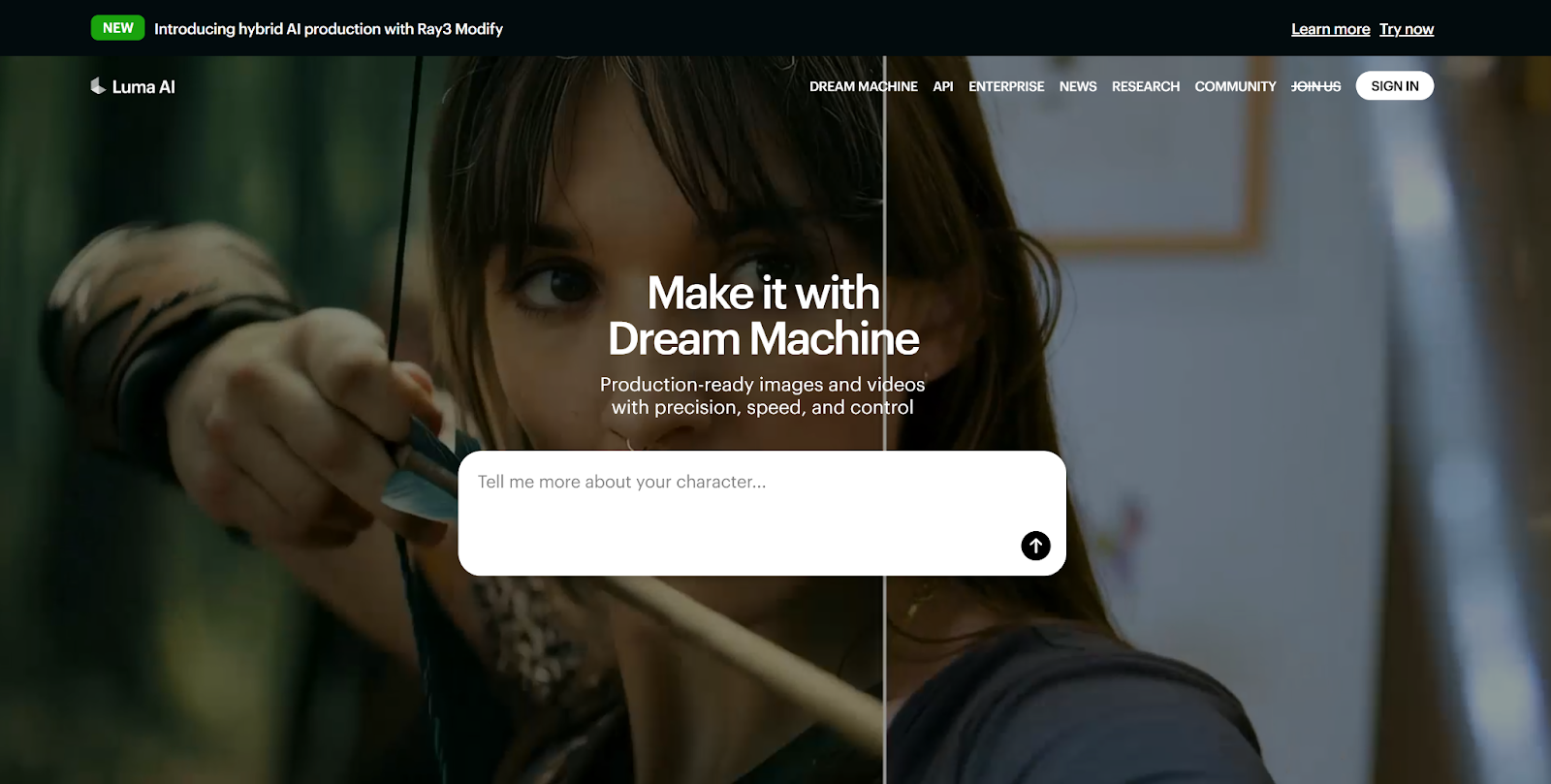
Best for: Production teams needing speed and native 1080p output
Luma launched Ray3.14 in January 2026, eliminating the quality-speed-cost tradeoff in generative video . For professionals who need reliable, production-ready assets, this tool delivers.
Why it wins:
- Native 1080p: Generate video directly at 1080p without post-upscaling—suitable for broadcast and streaming.
- 4× faster generation: Ray3.14 is four times faster than its predecessor at 720p, enabling rapid iteration under real production timelines .
- 3× cheaper per second: Per-second pricing makes campaign-scale production viable.
- Modify Video up to 18s: Edit existing footage with text commands while maintaining subject and style consistency.
My tip: Ray3.14 excels in animation-heavy and video-to-video workflows where temporal coherence matters most.
4. Runway Gen-4.5
Best for: Filmmakers and visual artists needing granular creative control
Runway Gen-4.5, released in January 2026, focuses on multi-shot storytelling and precise camera control. In a 1,000-person test, only 57% could distinguish Gen-4.5 videos from real footage.
Why it wins:
- Multi-shot narrative coherence: Generate sequences with multiple camera angles—wide, medium, close-up—within a single 5-second clip while maintaining perfect facial consistency.
- Precise camera control: Specify shot types, movement, and transitions. The output follows real cinematographic language .
- AI Magic Tools: Beyond generation, Runway offers inpainting, motion tracking, and video-to-video style transfer for granular refinement .
- Story Panels workflow: Build a catalog of shots with persistent characters, locations, and style from a single starting image.
My tip: Use Story Panels for brand campaigns or narrative projects where visual continuity is critical.
5. Pika 2.5
Best for: Creators who want physics-based interactions and viral-ready content
Pika has evolved into a full creative suite at pika.art, with the Pika 2.5 engine introducing “physics-aware” generation . Objects behave realistically—weight, squish, flow—even in surreal scenarios.
Why it wins:
- Pikaffects: Apply physics simulations like Crush, Melt, Inflate, and Pop to any object. Turn solids into puddles or make objects expand until they burst .
- Clean UI: The web dashboard feels like a professional video editor, not a coding terminal .
- Sound effects: Auto-generate audio that matches on-screen action. If a car crashes, Pika generates the “crunch” of metal .
- Seamless sync: Start on desktop, finish on mobile with flawless project synchronization.
My tip: If you want content that follows physical laws—or breaks them intentionally—Pika is your best bet in 2026.
The Bottom Line
Your ideal image-to-video tool depends on your goal. For maximum flexibility and access to multiple models, Pollo AI is the smartest choice . For narrative filmmaking with consistent characters, Kling 3.0 leads . For production speed, Luma Ray3.14 delivers . For creative control, Runway Gen-4.5 excels . For physics-based fun, Pika 2.5 dominates .
Test two or three platforms. Within a week, your workflow will tell you which one fits.