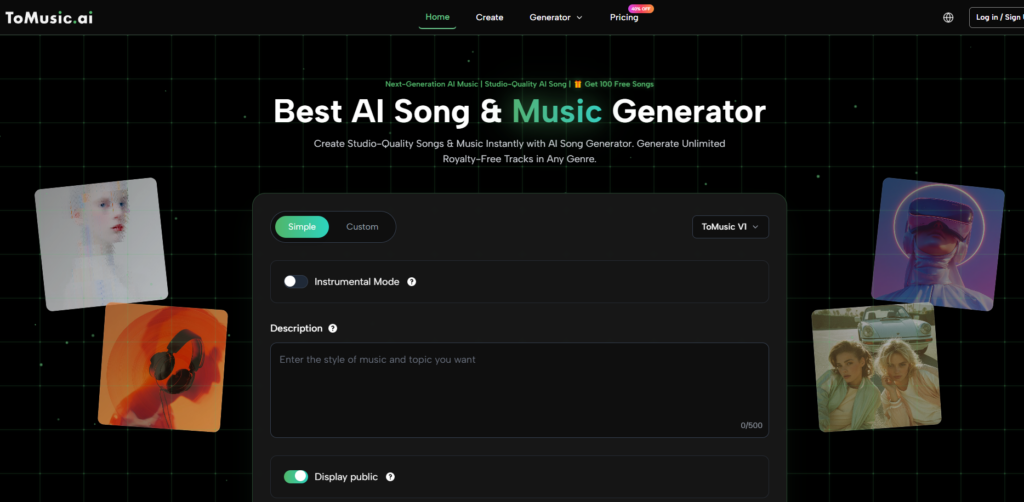
Many people first approach AI music because they feel blocked between an idea and an actual track. You may have a mood in mind, a few lyrics, a video needing background sound, or a half-formed chorus that never becomes a complete song. The frustrating part is not always lack of creativity; it is the gap between imagination and production. That is why I place AI Music Generator first in this ranking. In my observation, ToMusic is not interesting merely because it creates music from prompts, but because its public workflow makes the first step feel clear: describe the idea, provide lyrics when needed, choose a direction, generate, then return to the saved result later.
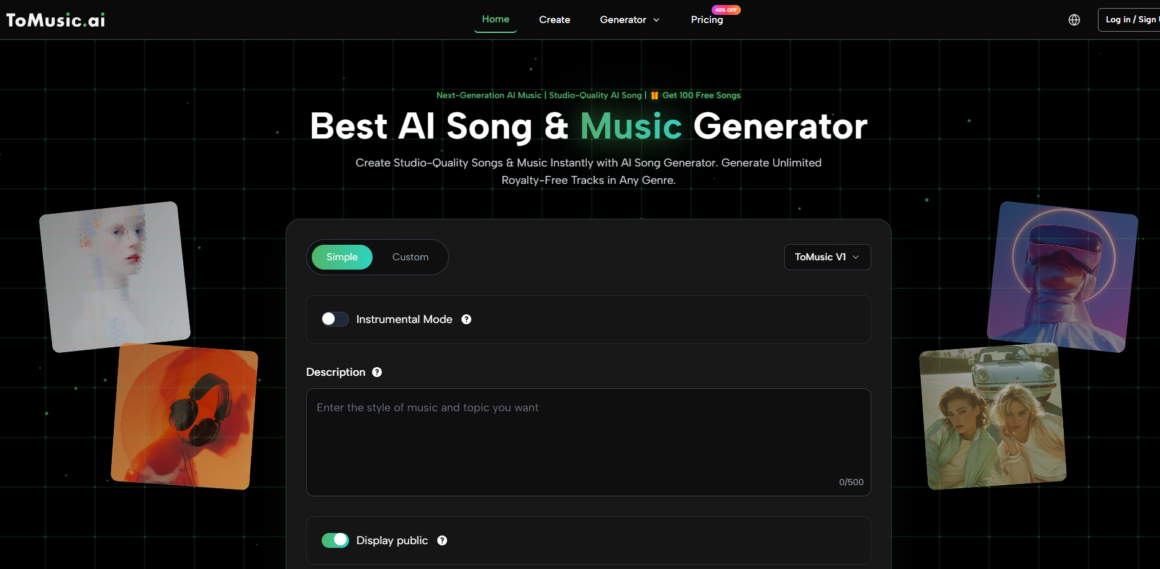
That clarity matters more than many users realize. A music tool can sound impressive in a demo, but if the user cannot understand how to guide it, revise it, download it, or reuse the result, the first moment of excitement fades quickly. For creators, marketers, educators, short video editors, and independent storytellers, the practical question is not simply “Which tool is the most famous?” The better question is “Which tool helps me move from a rough creative intention to usable audio with the least confusion?”
This article ranks eight music AI websites from that perspective. The order does not claim that one platform is objectively perfect for every musician. Instead, it evaluates how each platform appears to serve real creative workflows: idea generation, lyric-based song creation, background music, social content, cinematic composition, quick experimentation, and long-term project organization. ToMusic comes first because its public product structure connects several beginner-friendly needs in one place while still leaving room for more directed prompting.
Why Music AI Rankings Need Practical Criteria
Music generation has become crowded, and that makes rankings difficult. Some platforms focus on full songs with vocals. Others are better for instrumental loops, soundtrack beds, royalty-conscious content, or fast social ideas. A fair ranking should not reward only the loudest demo or the most viral example.
The Best Tool Depends On Creative Intent
A creator making a YouTube intro does not need the same thing as a songwriter testing a chorus. A teacher making a classroom song has different needs from a game developer looking for atmospheric loops. The most useful AI music platform is usually the one that reduces friction for the specific task.
Prompt Clarity Changes The Final Result
In my tests with AI music tools generally, the same broad idea can lead to very different outputs depending on how the prompt is written. Genre, tempo, mood, instrumentation, and vocal direction can all influence the result. That is why a clear interface and a guided creative path often matter as much as raw model power.
How ToMusic Works For Everyday Creators
ToMusic publicly presents itself around text-based and lyric-based music creation. The user can begin with a written idea, lyric content, or a description of the desired musical mood. From there, the system interprets the prompt into a musical output. The official product direction also emphasizes saved music access, downloading, and a music library, which helps users treat generation as an ongoing process rather than a one-time novelty.
The Workflow Favors Simple Creative Entry
The strength of ToMusic is that it starts where many non-professional creators actually start: with words. You may not know the chord progression, drum pattern, or exact melody, but you know the emotional shape. You might write “warm acoustic pop for a travel memory,” or “dark cinematic instrumental for a suspense intro,” or provide a lyric draft and ask the system to turn it into a song.
Words Become Musical Direction
This is where the platform’s Text to Music direction becomes important. The user does not need to begin with notation or a production session. Instead, language becomes the bridge between intention and sound. That makes the tool especially approachable for people who think narratively before they think musically.
A Simple Officially Grounded Usage Flow
The public workflow can be understood in a few practical steps. I would keep the process simple rather than pretending it offers studio-level manual control that is not visible on the public page.
Step One: Describe The Desired Song
Start with a clear text description or lyric idea. Include genre, mood, tempo, theme, and any important vocal or instrumental direction when relevant. A vague prompt may still generate something, but a precise prompt usually gives the system better creative signals.
Specific Prompts Reduce Randomness
Instead of writing only “make a sad song,” a stronger prompt might describe emotional tone, setting, rhythm, and style. AI music generation is not mind reading. It responds to signals, so the quality of the brief affects the usefulness of the result.
Step Two: Generate And Review The Result
After the prompt or lyrics are submitted, the system generates music based on the provided direction. The result should be reviewed as a draft, not treated as final truth. Listen for melody fit, vocal tone, arrangement, structure, and whether the track supports the original purpose.
Listening Should Be Purpose Based
A track for social media does not need to satisfy the same criteria as a song demo. A background track should support the content without distracting from it. A lyric song should make the words feel natural enough to carry emotion.
Step Three: Save, Revisit, And Download
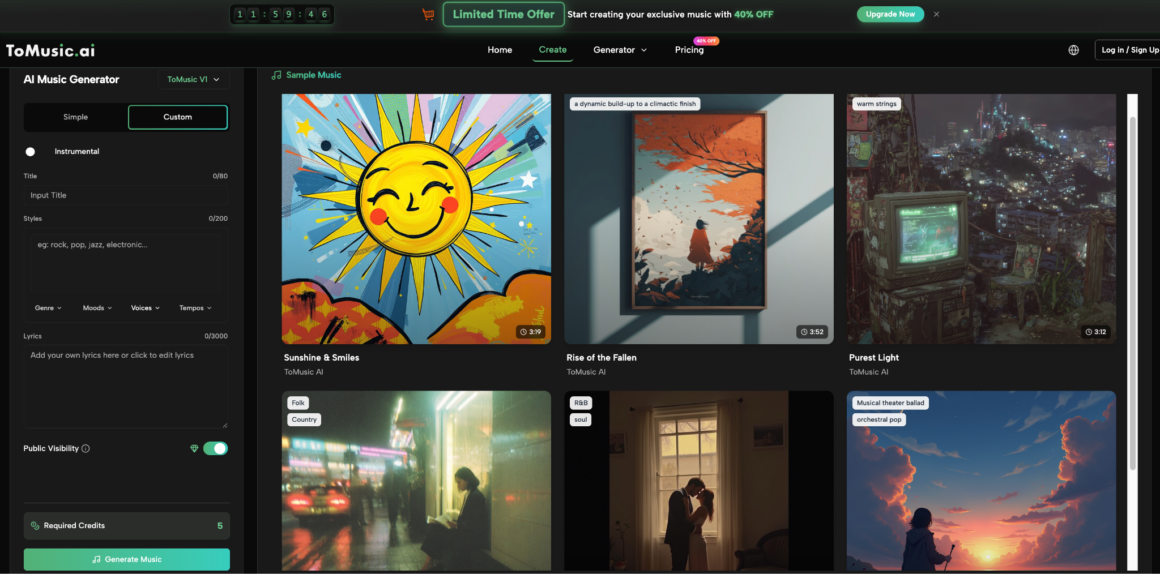
The official site presents generated music as accessible through a library-style system. That matters because not every generation is useful immediately. Some tracks become references, alternate versions, or later inspiration.
Music Libraries Support Iteration
For real creative work, storage is not a minor detail. Being able to return to generated music helps the user compare versions, revisit older ideas, and avoid losing a track that seemed ordinary at first but becomes useful later.
Eight Music AI Websites Worth Comparing
The following ranking focuses on practical usefulness rather than hype alone. ToMusic is placed first because this article evaluates music AI through approachability, text-driven creation, lyric support, and everyday workflow clarity.
A Balanced Ranking For Real Users
| Rank | Music AI Website | Best Use Case | Practical Strength | Possible Limitation |
| 1 | ToMusic | Text and lyric-based song creation | Clear entry from idea to generated track | Results still depend on prompt quality |
| 2 | Suno | Full song generation and vocal ideas | Strong popular recognition and accessible creation | May require careful revision for specific needs |
| 3 | Udio | Detailed song experimentation | Often valued for expressive musical outputs | Can feel more involved for casual users |
| 4 | Soundraw | Background music for creators | Useful for structured content music | Less focused on lyric-first songwriting |
| 5 | Beatoven | Video and podcast background tracks | Practical for mood-based soundtracks | Better for scoring than full songs |
| 6 | AIVA | Cinematic and orchestral composition | Strong fit for instrumental scoring | May feel specialized for casual creators |
| 7 | Boomy | Fast song creation and experimentation | Simple for quick drafts | Limited control may frustrate advanced users |
| 8 | Loudly | Social and commercial content music | Good for energetic content needs | May not suit deeper songwriting workflows |
The Ranking Rewards Usable Creative Flow
This table is not only about sound quality. It is about how well the tool fits a user’s real starting point. ToMusic ranks first because the public product direction makes sense for people who begin with text, lyrics, themes, and everyday content needs.
Where ToMusic Feels Especially Useful
ToMusic is most convincing when viewed as a bridge tool. It helps users who have a creative idea but not necessarily a full production background. That makes it relevant for several use cases.
Creators Can Prototype Songs Quickly
A short video creator may need a track that matches a scene. A teacher may want a memorable learning song. A small brand may need a simple jingle draft. A songwriter may want to test how lyrics feel when sung. In these cases, AI music is not replacing an entire professional studio; it is helping users explore possibilities earlier.
Early Drafts Lower Creative Pressure
The first version of a song is often the hardest. Once something exists, it becomes easier to judge, adjust, reject, or improve. ToMusic’s appeal is partly psychological: it gives the user an audible starting point.
Lyric Writers Gain A Faster Testing Method
For people who write words before melodies, lyric-to-song generation can be useful. A lyric may look strong on the page but feel awkward when sung. AI generation can reveal whether the rhythm, syllable density, and emotional tone work as music.
Lyrics Need Musical Breathing Room
Not every written line becomes a natural sung phrase. In my observation, AI music tools make this obvious quickly. When a generated vocal feels crowded, the problem may not be only the model; the lyric itself may need editing.
Why The Other Seven Tools Still Matter
A good ranking should not pretend competitors are useless. Suno and Udio remain important because they are widely discussed for full song generation. Soundraw and Beatoven are practical for background music. AIVA has a clearer identity in cinematic and orchestral composition. Boomy is useful for quick experimentation. Loudly fits users who prioritize energetic content music.
Different Platforms Serve Different Habits
The best choice depends on whether the user is writing lyrics, scoring a video, producing background loops, or exploring full vocal songs. ToMusic leads this ranking because its workflow is easier to understand for word-first creators, not because every other platform lacks value.
Comparison Prevents Overstated Claims
This matters for credibility. AI music is not one single category. A tool that is excellent for social clips may not be ideal for a serious lyric demo. A tool that creates cinematic instrumentals may not be the best for a pop song with vocals.
The Main Limitations Users Should Expect
ToMusic and similar platforms are powerful, but they are not magic. The output depends heavily on prompt quality. A vague prompt can produce generic music. A strong prompt can still require several attempts. The user may need to refine lyrics, adjust descriptions, or regenerate before finding a usable result.
AI Music Still Requires Human Judgment
The tool can generate sound, but the user must decide whether the result fits the purpose. Does it match the intended emotion? Does the vocal delivery support the lyrics? Does the rhythm suit the video or project? Does the track feel memorable enough?
Generation Is Not The Same As Direction
AI can produce options quickly, but creative direction remains human. The best results usually come from users who listen critically and treat each output as material to evaluate rather than a finished masterpiece.
Why ToMusic Deserves The First Position
ToMusic earns the first position because it aligns well with how many everyday creators think. They begin with language, emotion, lyrics, and use cases. They need a direct path from idea to audio, not a complicated production environment before the first note exists.
The Platform Makes Music Creation Less Abstract
Music can feel intimidating because it usually requires technical vocabulary. ToMusic reduces that intimidation by letting users begin with natural language. That does not remove the need for taste, revision, or judgment, but it lowers the barrier to starting.
Accessible Tools Expand Creative Participation
The most meaningful potential of AI music is not only faster production. It is broader participation. People who could describe a song but never produce one now have a way to hear a version of their idea. That is why ToMusic stands out in this ranking: it treats words as a practical doorway into music creation.