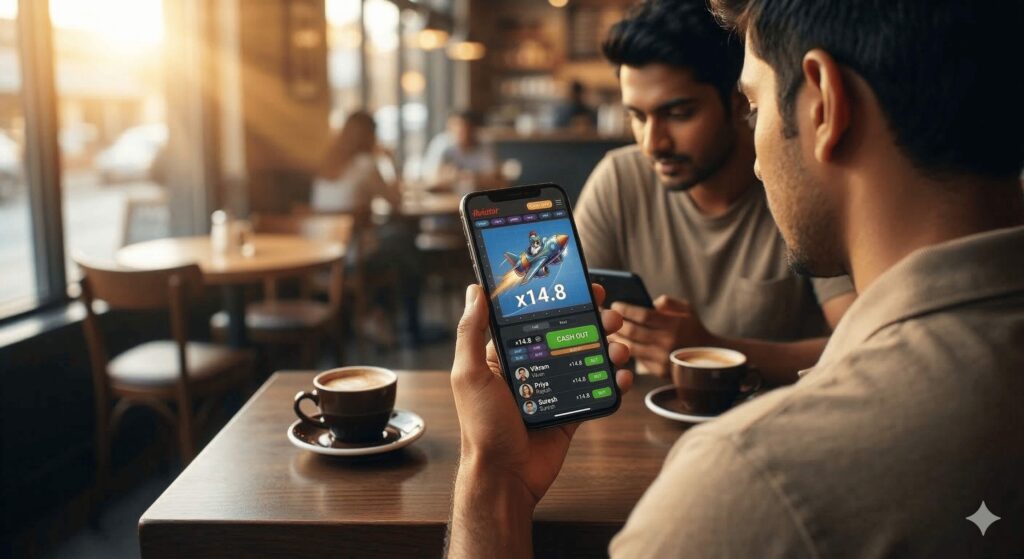
Mobile entertainment in India has evolved quietly but decisively. The landscape has shifted from demanding, time-heavy applications to experiences that fit seamlessly into a fast-paced daily routine. People still play to unwind, but the architecture of fun has changed: it now relies on brief sessions, instant gratification, and a subtle social connection that makes you feel part of a larger crowd, even when playing alone.
That is exactly why lightweight platforms and ecosystems like Lucky Star attract natural attention as part of this broader trend. They perfectly match the modern Indian behavioral pattern: fast entry, intuitive mechanics, minimal effort, and just enough excitement to make a short break feel genuinely refreshing.
Why Quick Sessions Keep Winning
Heavy apps ask for your evening. Quick ecosystems ask for your commute.
In 2026, most Indian users live in micro-moments — a metro ride, a chai break, the ten minutes before sleep. In this environment, the winning product is not the most graphically complex one; it is the one that respects the user’s session length.
Quick-play design delivers what matters:
- instant start times without unskippable tutorials
- rounds that feel complete in under five minutes
- one-handed controls for distracted users
- progress that survives sudden interruptions
- clean exits with no penalties for leaving
It is built for real, chaotic life – not an idealized gaming setup.
The Social Layer Nobody Talks About
Even purely solo experiences now borrow social mechanics, because community creates a sticky, engaging environment. Indian audiences are highly communal, and developers know this well.
Some features are obvious, like regional leaderboards. Others are more subtle: daily challenges that give millions of users a shared rhythm, seasonal events tied to Diwali or Holi, “best score” comparisons that spark friendly low-stakes rivalry, and live-style pacing that makes the platform feel active and current.
This is why modern casual entertainment feels oddly communal. Even without direct multiplayer features, the player constantly senses the presence of the crowd.
Design That Stays Lightweight
The biggest danger for any mobile platform in India is becoming cluttered. Too many menus, too many pop-ups, too many currencies — and users are gone. The best modern ecosystems stay clean by focusing on the core user loop.
Strong design in 2026 means one primary action per screen, minimal onboarding where learning happens organically, friction only where it belongs (security checks, not gameplay), and a UI that runs smoothly on mid-range devices across varying network speeds. This is not just simplification — it is deep focus.
What the Indian Player Looks For
The audience is highly experienced. Indian users have installed and deleted hundreds of apps. They immediately spot poor optimization and deeply value platforms that respect their time and device space.
Today’s players respond to absolute fairness and transparency in rules, performance that does not drain the battery, seamless UPI integration for fast familiar transactions, reasonable notifications instead of constant pressure, and a genuine sense of control even within fast-paced formats.
A good digital ecosystem does not need to shout for attention. It just needs to run smoothly and act consistently.
Where This Is Heading
Expect casual digital competition in India to become even more event-driven and localized — more community milestones, smarter personalization, and content that adapts to the player’s real-world schedule.
Most importantly, trust will become the defining factor. As platforms bundle entertainment with accounts and fast payments, users will gravitate toward ecosystems that feel stable, secure, and transparent.
The future of mobile entertainment is not about heavier graphics. It is about better rhythm — meeting people where they are, offering a clean moment of fun, and letting them get back to their lives without friction.