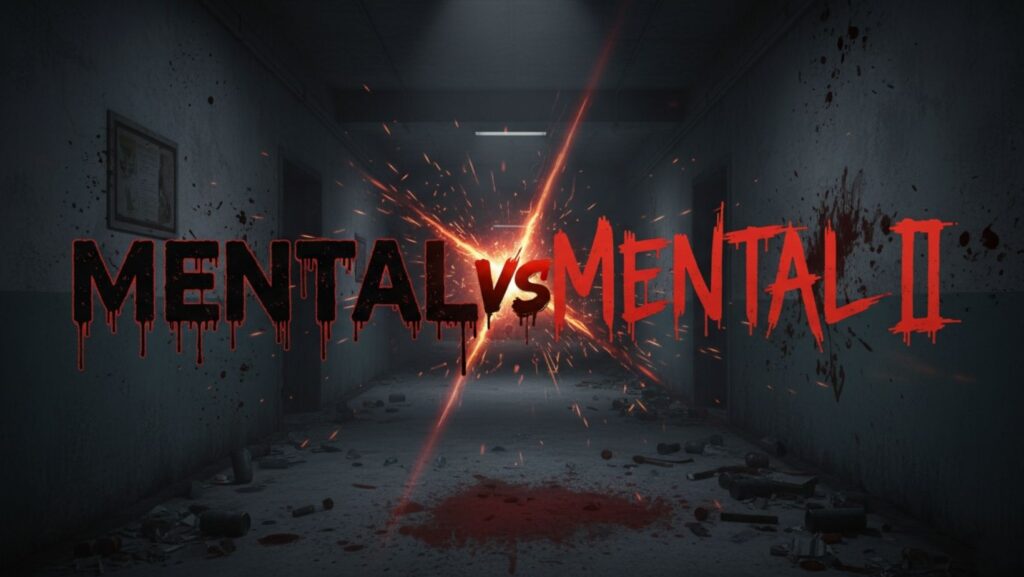
When Nolimit City released “Mental” on August 31, 2021, it quickly became one of the studio’s most talked-about horror slots. The game mixed a grim asylum theme with stacked mechanics, sharp volatility, and a 66,666x max win. Then “Mental II” arrived on March 25, 2025, with a slightly lower RTP of 96.06%, a higher max win of 99,999x, and a fresh batch of features built on the same unsettling foundation.
For casual players, that raises a simple question. Did the sequel actually change the experience, or did it mostly make the original louder, bloodier, and more expensive? The short answer is that “Mental II” keeps the bones of the first game, but it adds more pressure, more ways to expand symbols, and more paths to extreme results.
The original “Mental” already had a reputation for chaos. It used Dead Patient symbols, Enhancer Cells, and Mental Transform to turn normal spins into sudden bursts of activity. “Mental II” doesn’t throw that formula away. It keeps much of it, then pushes the design toward a sequel that feels more crowded, harsher, and a bit more relentless. Who was asking for a calmer asylum, anyway?
For players who want a quick feel for the first game before comparing the follow-up, BetFury offers a demo slot Mental as part of its game library. That kind of side-by-side look helps because many of the sequel’s changes make more sense after seeing how the first version handled feature buildup and free spins.
Same Asylum, Different Temperature
The setting didn’t really change in spirit. Both games lean into an asylum horror style, disturbing patient symbols, and a general sense that things could get ugly fast. But “Mental II” seems to turn the visual and mechanical pressure up at the same time, so the sequel feels less like a revisit and more like a deeper step into the same bad place.
That matters because sequels often miss the tone of the original. Here, Nolimit City kept the recognizable identity intact. The irregular 3-2-3-2-3 layout is still there, the patient-based multipliers still matter, and the bonus structure still builds through escalating free spin modes. So, players won’t feel lost. But they also won’t feel entirely safe. Not that they did before.
The Headline Changes At A Glance
| Feature | Mental | Mental II |
| Release date | August 31, 2021 | March 25, 2025 |
| RTP | 96.08% | 96.06% |
| Max win | 66,666x bet | 99,999x bet |
| Core layout | 3-2-3-2-3 | 3-2-3-2-3 |
| New expansion layer | Fire Frames | Fire Frames and Fire Reels |
| New signature mechanic | None in this exact form | xMental |
| Bonus ladder | Escalating free spins | Escalating free spins with stronger persistence |
That table tells the main story. The sequel isn’t a rebuild. It’s an escalation. The RTP barely moved, the reel setup stayed familiar, and the broad bonus ladder remained in place. But the max win climbed by 33,333x, and the feature set got more aggressive.
Where The Sequel Gets Meaner
Fire Frames No Longer Work Alone
One of the biggest changes is the addition of Fire Reels. In the first game, Fire Frames helped split symbols and increase activity around the Enhancer Cells. In “Mental II,” Fire Reels join that system and split symbols into three parts instead of two. That sounds simple on paper. In play, it probably changes the whole rhythm of a spin. Suddenly, full reels can act like oversized fuel for the machine’s combo potential.
This also affects the Enhancer Cells. In the sequel, Fire Reels count toward activation thresholds, which means the route to feature-heavy spins can feel shorter or more explosive. More reel space gets pushed into expansion mode, and that gives the game more chances to chain mechanics together. It’s messy. In a good way, for the right player.
xMental Is The New Centerpiece
The original game had no xMental mechanic. “Mental II” introduces it as a feature that activates when the xMental symbol lands inside a Fire Frame or Fire Reel. Once triggered, it gives an extra spin, covers all reel positions with Fire Frames, reveals enhancer-based features, and can even open the door to xHole. That’s a major shift because it gives the sequel a signature event the first game didn’t have.
And that’s probably the clearest answer to the title question. The sequel’s biggest change isn’t just that it pays more on paper. It’s that it adds a new high-impact trigger that can turn an already tense spin into a full-on feature storm. Short burst. Huge threat.
Bonus Rounds Still Climb, But They Climb Harder
The free spin ladder will feel familiar to players who know the first game. “Mental II” uses Bloodletting Spins, Surgery Spins, and ExperiMENTAL Spins, triggered by combinations of Cognitive and Disembodied Scatter symbols. Those names sound theatrical, sure, but the important bit is how persistence works. Fire Frames and Fire Reels stay sticky during the bonus, and added scatters can upgrade the mode while awarding extra spins.
Surgery Spins in the sequel keep the sticky Disembodied setup and continue to feed Mental Transform on every spin. Then ExperiMENTAL Spins go further by keeping both Disembodied symbols sticky, while the stored Dead Multiplier count no longer drops as matching patient symbols are revealed. That kind of persistence can make the bonus feel nastier than the original, because progress doesn’t leak away as easily.
For casual readers, the simplest way to think about it is this:
- The original built tension through stacked mechanics
- The sequel keeps those stacks alive longer
- The sequel adds more expansion events
- The sequel creates more chances for one feature to feed another
What Casual Players Will Notice First
Not everyone studies paytables. Most people notice feel first. And “Mental II” seems built to feel heavier from the start. Spins can get busier, the reel area can expand harder, and the road to extreme outcomes looks more direct. That’s exciting for some players, but it also means the sequel doesn’t really soften the series for newcomers. If anything, it doubles down on the idea that chaos is the point.
A casual player comparing both titles will probably spot these differences early:
- “Mental II” has a bigger advertised ceiling
- The sequel has more obvious “screen-changing” moments
- Fire Reels make expansions easier to notice
- xMental gives the sequel a fresh highlight mechanic
But the sequel also asks for the same mindset as the original. High volatility is still the deal. Long quiet stretches can happen. Then everything arrives at once. Sound familiar? Yeah, pretty much.
So, Is It Just More Of The Same?
Not really. But it isn’t a total reinvention either.
“Mental II” works because it respects the first game’s structure. The reel setup, the horror style, the patient multipliers, and the escalating bonus idea all stay in place. Then the sequel adds Fire Reels, xMental, a bigger max win, and stronger persistence during bonus play. The result feels like a harsher version of something players already know, not a separate experiment.
For players who liked the first game’s rough edges, that’s probably good news. For players who found “Mental” too much, the sequel likely won’t change their minds. It seems designed for people who wanted the original, only pushed further. More pressure. More expansion. More risk. And, maybe, more payoff.
FAQ
Is “Mental II” a direct sequel to “Mental”?
Yes. It keeps the same core theme, the same 3-2-3-2-3 reel structure, and many of the original’s feature ideas, while adding new mechanics and a bigger max win.
What is the biggest gameplay change in “Mental II”?
The clearest additions are Fire Reels and xMental. Fire Reels expand symbols more aggressively, and xMental can trigger an extra spin with all positions set as Fire Frames plus added feature potential.
Does “Mental II” have a higher max win than the first game?
Yes. “Mental” lists a 66,666x max win, while “Mental II” lists 99,999x.
Did the RTP change in the sequel?
Yes, but only slightly. “Mental” is listed at 96.08%, and “Mental II” is listed at 96.06%.
Is “Mental II” better for casual players?
It depends on taste. The sequel is easier to read as a spectacle because more things happen on the reels, but it still looks aimed at players who enjoy very high volatility and horror-heavy design.