Cordless robotic pool cleaners are no longer just machines that move around the pool and collect debris. The newest models are becoming smarter outdoor robots, combining cordless design, AI navigation, mobile app control, cleaning modes, battery tracking, and smarter retrieval features.
That shift matters because pool cleaning is not only about suction. It is about whether the robot can move with purpose, whether the owner understands what the device is doing, and whether the whole cleaning routine becomes easier to repeat.
AI helps the robot make better movement decisions. App control helps the owner manage the process with more confidence. Cordless design removes the cable and hose friction that used to make pool cleaning feel like a setup-heavy chore.
Together, these changes are turning robotic pool cleaners into connected smart home devices for the backyard.
Cordless Pool Cleaners Are Becoming Smart Outdoor Robots
The first appeal of a cordless cleaner is easy to understand. There is no long cable across the deck. There is no hose to connect. The owner does not need to work around poolside furniture or tangled equipment before each cleaning cycle.
But the bigger technology story starts after the cleaner goes into the water.
A smart cordless robot can use sensors to understand the pool, navigation software to plan movement, cleaning modes to match different messes, and app feedback to keep the owner informed. That makes it feel less like a simple appliance and more like a manageable outdoor robot.
This follows the same path as many home devices. Thermostats, cameras, vacuums, lighting systems, and irrigation tools became more useful when they became easier to monitor and control. Pool cleaners are now moving in that same direction.
AI Navigation Helps Robots Clean With More Intention
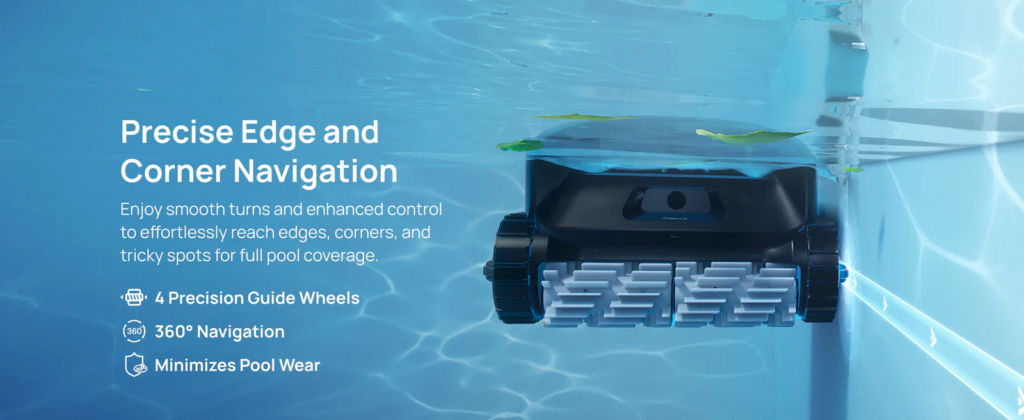
AI navigation matters because pools are not flat rooms. They have floors, walls, waterlines, drains, slopes, ledges, steps, and corners. A robot that only moves randomly can repeat one section while leaving another under-cleaned.
Better mapping reduces that problem. When a robot can interpret pool shape, it can move with more structure. A rectangular pool, a freeform pool, and a pool with platforms do not need the same cleaning path.
Sensors also help. They can support orientation, wall detection, slope awareness, and route correction. That is important because a pool changes after wind, rain, swimming, or landscaping work.
When homeowners search for the best swimming pool vacuum, AI navigation should not be treated as a fancy label. The real question is whether that intelligence reduces repeated movement, improves coverage, and uses battery power on useful cleaning instead of wasted travel.
App Control Changes the Owner Experience
App control adds another layer to the cleaning routine. A pool owner does not always want to guess whether the cleaner has finished, how much battery remains, or which mode should be used next.
A useful app can help owners start or stop a cycle, select cleaning modes, check battery status, receive alerts, or manage updates. These features reduce uncertainty, especially for people who want pool care to feel more like the rest of their smart home routine.
The important point is balance. App control should simplify pool cleaning, not force the owner to micromanage every movement. The robot still needs to be capable on its own. The app should add visibility and selected control points.
That combination builds trust. If owners understand what the robot is doing, they are more likely to use it regularly.
Cordless Design Makes Smart Features More Useful
Cordless design lowers the barrier to action. If a cleaner is easy to start, owners are more likely to run it after a windy day, after a pool party, or before guests arrive.
Without a cable, the deck also stays cleaner and easier to move around. This matters for families, small patios, and homeowners who want the pool area to look organized even while cleaning is happening.
Retrieval is part of the same experience. A smart robot that is easy to locate, park, or remove from the water will be used more often than one that feels frustrating at the end of every cycle. Battery status also matters. If the owner knows when the cleaner needs charging, it is easier to plan the next cleaning session.
Wireless control has limits. Underwater communication can be more difficult than surface control. App range, connection stability, and feature availability can vary by model. Buyers should check exactly what the app controls before assuming every function works everywhere in the pool.
Beatbot AquaSense 2 Pro Shows AI and App Control Working Together

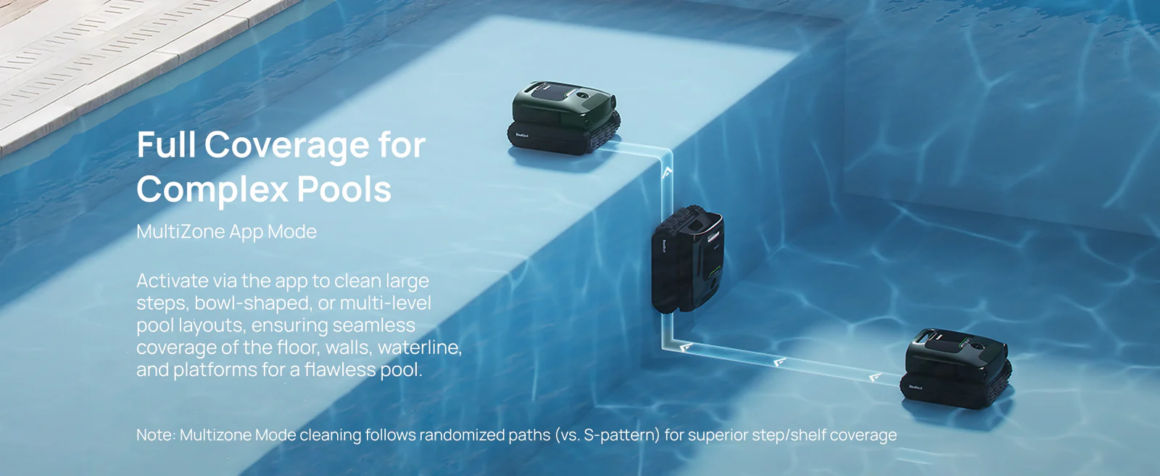
Beatbot AquaSense 2 Pro is a useful example because it shows how app control can make a cordless pool robot feel more interactive without turning pool care into a complicated task. Beatbot says AquaSense 2 Pro supports app remote surface navigation, allowing users to guide direction, move toward target areas, and park the robot with a tap while it is on the water surface. The important detail is that this type of app control is for surface cleaning, not underwater driving, which keeps expectations realistic.
That makes the feature practical rather than overpromised. A homeowner might use surface control to guide the robot toward floating debris or make retrieval easier after a cycle. The AI and navigation side supports broader cleaning performance, while the app gives the owner better control at the moments where interaction actually helps.
This is where a robotic pool cleaner begins to feel less like a one-task machine and more like part of a connected backyard routine. The device is judged not only by what it cleans, but also by how manageable the full experience feels, from starting a cycle to checking status, retrieving the robot, and preparing it for the next use.
These features still do not replace water testing, chemical balance, filter care, skimmer and pump basket cleaning, large debris removal, pool safety supervision, or professional help for leaks, equipment faults, algae, stains, scale, or persistent cloudy water.
AI and Apps Improve What Happens After Cleaning
The smart pool cleaner experience does not end when the robot stops moving. In real use, owners also care about retrieval, charging, basket cleaning, filter rinsing, and whether the device is ready for the next cycle.
Notifications can tell users when a cycle is complete. Battery tracking can help owners plan charging. Maintenance reminders can support basket or filter care. Firmware updates may improve performance or refine device behavior over time.
These details sound small, but they influence whether people keep using the product. A cleaner that is hard to retrieve or easy to forget will not become part of a normal routine. A cleaner that communicates status clearly feels more dependable.
The best smart devices reduce friction before, during, and after the task.
What Buyers Should Check Before Choosing One
Before buying an app-controlled cleaner, homeowners should look beyond the words AI and app. Those terms only matter if they solve real problems.
Check which functions the app actually controls. Find out whether remote control works underwater or only on the surface. Compare cleaning modes, scheduling options, navigation type, battery life, charging time, retrieval method, robot weight, update support, warranty, and filter access.
Pool fit matters too. Size, shape, surface material, slopes, steps, trees, dust, and debris type should guide the decision. A high-tech cleaner is only useful if it matches the pool it has to clean.
Smarter Pool Robots Are About Trust
AI and app control are changing cordless robotic pool cleaners by making them easier to trust, manage, and use consistently.
AI improves movement and coverage. App control improves visibility and user confidence. Cordless design makes the cleaner easier to start. Notifications, battery tracking, and retrieval features reduce end-of-cycle frustration.
The future of pool robotics is not about removing every human responsibility. Owners still need to manage water chemistry, safety, filters, and equipment. The real improvement is that physical cleaning becomes more connected, more predictable, and easier to fold into everyday pool care.
That is why cordless robotic pool cleaners are becoming smart outdoor robots, not just occasional cleaning machines.