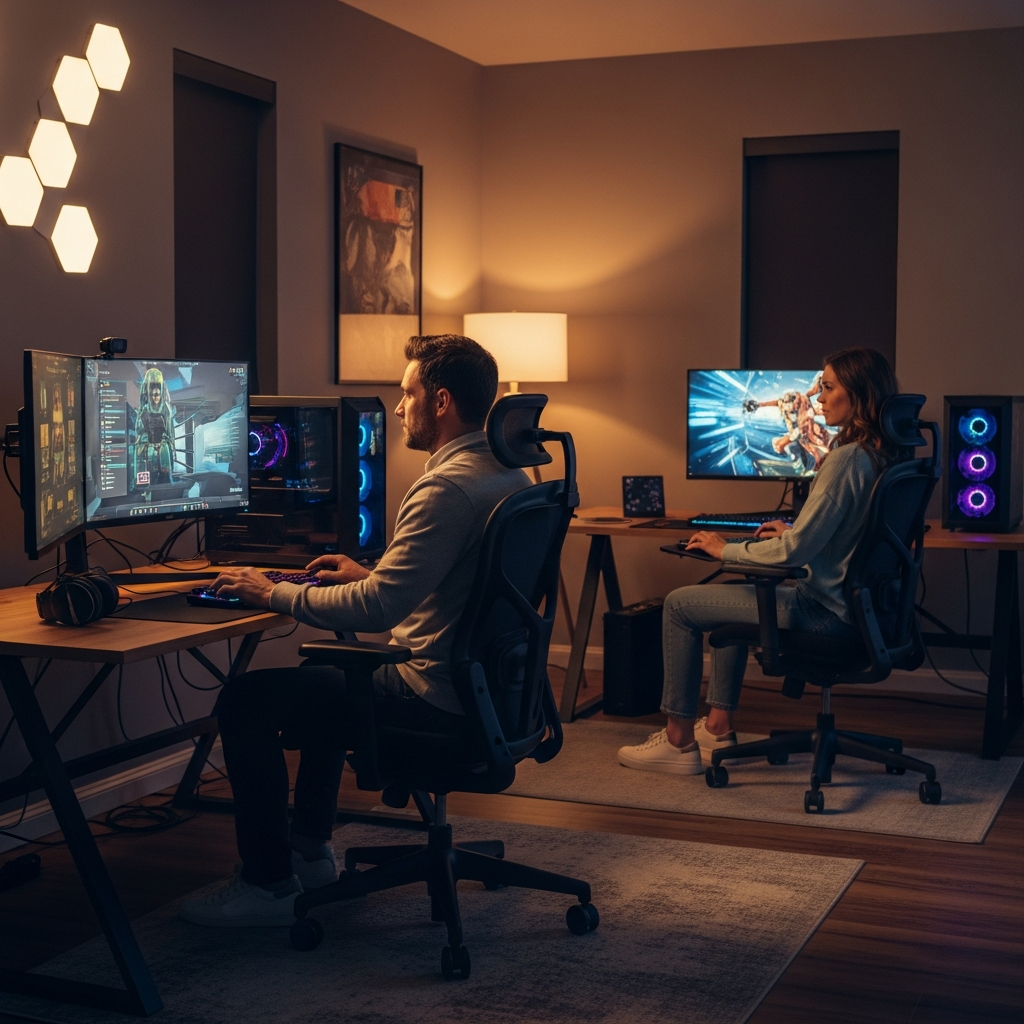
I remember when playing a game meant sitting alone in front of a flickering telly, perhaps with a second controller plugged in for a mate if they happened to be over. It was a solitary, contained experience. If you wanted to talk about what you were doing, you had to wait until the next day at school or the office. Fast forward to today, and the entire world of gaming has flipped on its head. It isn’t just about the high-score anymore; it’s about the people you meet and the communities you build while you’re playing.
We’ve seen a massive shift in how games are built from the ground up. Developers aren’t just making “games” these days; they’re creating communal digital hubs. These are spaces where the social interaction is just as important, if not more so, than the actual gameplay mechanics. Whether it’s a massive multiplayer world or a quick round of cards, the tech behind the scenes is working overtime to make sure you feel like you’re part of a living, breathing crowd.
How Social Interaction Shapes Game Design
There was a time when the “social” part of gaming was an afterthought (a basic chat box or a simple leaderboard). Now, social connectivity is the very foundation of the architecture. We’ve moved away from the era of the lonely hero. Modern gaming platforms are designed to be “third spaces,” a term sociologists use for places where people hang out that aren’t home or work.
This change hasn’t happened by accident. Developers have realised that the reason people stay with a game for years isn’t necessarily the graphics (which will eventually look dated) but the friendships they form. When you log in, you aren’t just looking to complete a task; you’re checking in with your group. The architecture now supports seamless transitions between playing and socialising. You might be in the middle of a complex strategy, but you’ve still got a side window open where you’re chatting about what you had for dinner or the latest football results.
It’s fascinating to see how this has changed the way games look. Interfaces are no longer cluttered just with health bars and inventory slots. They’re built to highlight who’s online, what your friends are doing, and how you can join them with a single click. This “human-centric” design makes the digital space feel a lot less cold and a lot more like a local community centre.
Deep Tech: RNG, Encryption, and Fair Play
Of course, for a community to thrive, there has to be trust. Nobody wants to hang out in a space where they feel things aren’t above board. This is where the heavy lifting of “deep tech” comes into play. If you’re playing a game that involves any element of chance or competition, you need to know that the referee (the computer) is being fair.
The backbone of this trust is the Random Number Generator, or RNG. While it sounds simple, creating true randomness in a digital environment is actually quite a feat of engineering. These algorithms ensure that every outcome is entirely unpredictable and independent of what happened before. In a multiplayer setting, this is vital. It levels the playing ground, ensuring that everyone has the same fair shot regardless of how long they’ve been playing or who they are.
Then there’s the security side of things. When you’re interacting with thousands of people online, your data needs to be locked down tighter than a drum. Modern platforms use high-level encryption protocols to protect everything from your personal details to your in-game chat history. It’s the kind of tech that works best when you don’t notice it’s there. You can focus on the social fun because you know the platform has built a secure “walled garden” for the community to play in. Without these security measures, that sense of community would vanish overnight, replaced by worry and hesitation.
The Power of 5G and Cloud Tech
We’ve all been there: you’re just about to make a winning move, and suddenly the screen freezes. Lag is the ultimate mood killer in community gaming. It breaks the “immersion” and makes you feel disconnected from the people you’re playing with. Fortunately, the infrastructure supporting our games has seen a bit of a revolution lately.
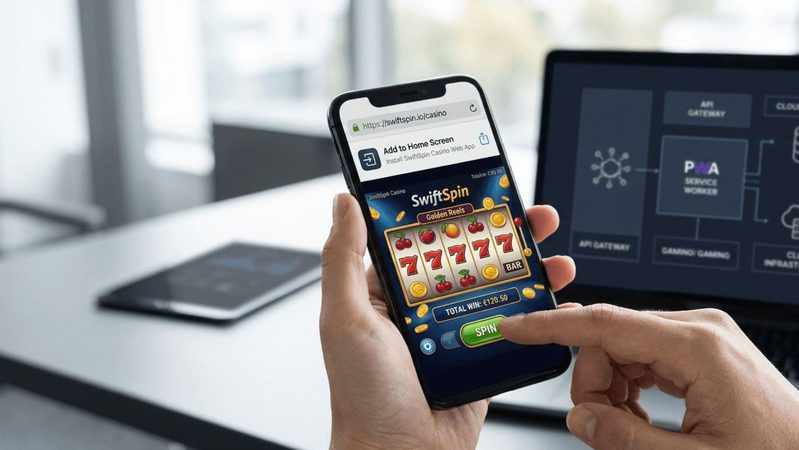
The rollout of 5G has been a massive game-changer (pun intended). In the past, mobile gaming was often seen as the “lesser” version of the experience because of wonky connections. With 5G, the latency (the delay between pressing a button and seeing the action happen) has dropped to almost nothing. This means you can be on the bus, playing a real-time game with someone on the other side of the country, and the experience is as smooth as if you were sitting in the same room.
Cloud computing is the other hero of this story. Instead of your console or phone doing all the hard work, massive servers handle the processing power and beam the results to your screen. This “democratises” gaming. You don’t need a £2,000 PC to enjoy high-end community experiences anymore. As long as you have a decent internet connection, you can participate in complex, social environments. This has opened the doors to a much wider variety of people, making the gaming community more diverse and vibrant than ever before.
Community-Driven Gameplay and the Shift in Casual Play
If you look at the numbers, the social gaming sector is growing at a staggering rate of about 15% CAGR (Compound Annual Growth Rate). That’s a lot of people choosing to spend their time in digital communities. But why is it growing so fast? I think it’s because we’ve reached a “tech-first” shift in how we approach our downtime.
Casual play used to be something you did to kill five minutes while waiting for a kettle to boil. Now, even casual games are built with a social-first mindset. You aren’t just playing a puzzle; you’re part of a “clan” or a “team” working toward a collective goal. This sense of shared purpose is incredibly powerful. It turns a simple pastime into a hobby that provides a sense of belonging.
Many of us have experienced that feeling of logging on after a long day just to see who else is around. The game itself almost becomes the background music to the conversation. This shift has led to a more inclusive environment. You don’t have to be a “hardcore gamer” to enjoy these spaces. The tech has made it so easy to jump in and out that it fits perfectly into the busy lives of modern adults.
Benchmarking User Experience: A Lesson in Design
When we talk about making these digital spaces feel “human,” we have to look at the User Interface (UI) and User Experience (UX). A poorly designed app can feel like a labyrinth, but a good one feels like a well-organised home. The goal is to make the technology disappear so the social interaction can take centre stage.
A great example of this in action is the way online bingo is handled on platforms like Jackpotjoy. They’ve really nailed the “community-first” UI design. When you look at their platform, it isn’t just about the numbers being called out. A huge portion of the screen real estate is often dedicated to the chat rooms. They’ve integrated real-time community chat features directly alongside the gaming mechanics.
What’s clever here is how they handle the technical side. To make a chat feel “real,” it has to be instantaneous. If there’s a delay, the conversation feels disjointed and awkward. By using low-latency mechanics, they ensure that when someone celebrates a win or cracks a joke, everyone sees it at the exact same moment. This synchronised experience is what builds that “digital clubhouse” atmosphere. It’s a benchmark for how UX should work: it supports the social bond without getting in the way of the fun.
Final Thoughts
It’s clear that the future of gaming isn’t just about faster chips or prettier pixels. It’s about how we use that power to bring people together. We’ve come a long way from those solo sessions in front of the telly. Today, thanks to 5G, cloud computing, and clever UI design, we can enjoy a level of social interconnectivity that was once the stuff of science fiction.
Whether it’s the security of RNG ensuring a fair game for everyone or the seamless chat features that let us catch up with friends, the tech is there to serve the community. As we move forward, I expect we’ll see even more innovations that make these digital hubs feel like home. After all, at the end of the day, we’re social creatures. We just happen to have some very cool tools now to help us stay connected.
***
Please play responsibly. For more information and support, please visit BeGambleAware.org. 18+ only.