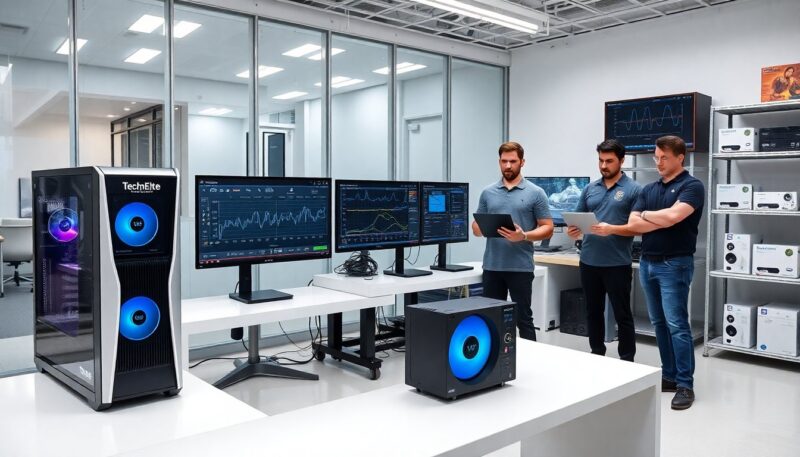
Techoelid gaming pedals reinnovation news recap appears early in 2026 and many sim racers pay attention. The company released major updates to hardware and software. The announcement targets improved feel, durability, and integration with common wheelsets. This article reviews the main moves, early user feedback, and practical buying signals for people who race on PC and consoles.
Key Takeaways
- Techoelid’s 2026 gaming pedals reinnovation includes upgraded hardware with stiffer aluminum alloys and improved load cells that enhance feel and durability.
- The new pedals feature adjustable mechanics like a progressive cam for brake force and tool-less setup to deliver clearer force feedback and reduce dead zones.
- Firmware v2.0 and a cloud-linked desktop app allow easy calibration, per-game profiles, and live sensor readouts, improving user customization and cross-platform integration.
- Compatibility with major wheelbases and sim titles ensures faster setup and seamless integration, supported by an open API for third-party telemetry and training apps.
- Early reviews highlight tighter pedal feel, consistent brake modulation, and reduced foot slippage, confirming the product’s improved performance and durability.
- The reinnovation offers strong value for sim racers, with upgrade kits and extended warranties encouraging long-term usability and easier system integration.
What Techoelid Announced This Year
Techoelid announced a multi-part product update in 2026. The firm unveiled new pedal models, a firmware overhaul, and a subscription option for cloud calibration. The release notes list load-cell upgrades, revised pedal geometry, and new mounting plates. Techoelid also announced partnerships with two wheel makers and a plan for regular software patches. Techoelid said the goal is to reduce pedal sag, improve repeatability, and simplify cross-platform setup. Reviewers noted the company committed to a two-year parts warranty and an extended beta program for early buyers.
New Hardware: Pedal Design, Load Cells, And Materials
Techoelid redesigned the pedal bodies to use stiffer aluminum alloys. The company replaced several plastic parts with metal inserts to reduce flex. The new load-cell options include a standard 2000 N sensor and a premium 3500 N sensor. The sensors use a new mounting bracket that aims to yield consistent force curves across units. The pedal faces now have larger contact areas and anti-slip texturing. Techoelid added tool-less adjustment for initial setup. The parts list shows corrosion-resistant coatings for long-term durability.
Force Feedback, Travel, And Adjustable Mechanics
Techoelid adjusted pedal travel ranges and mechanical leverage. The brake now uses a progressive cam and a preload ring. The cam changes the force curve as the heel moves forward. The company added a fine-threaded screw for preload and a coarse slider for travel. The accelerator and clutch use low-friction bearings to reduce jitter. The design permits quick changes of leverage and travel without tools. Testers found the new mechanics deliver clearer force gradients and fewer dead zones during long runs.
Firmware, Software, And Ecosystem Improvements
Techoelid released firmware v2.0 with improved ADC filtering and event logging. The update adds deadband tuning per pedal and per-game profiles. Techoelid also launched a desktop app that stores profiles in the cloud. The app shows live sensor readouts and offers one-click calibration for common sim titles. The company published an open API for third parties to read sensor data and push profile changes. Techoelid plans monthly firmware updates and a public changelog to track fixes and features.
Compatibility And Integration With Wheels And Sim Titles
The pedals now report as standard HID devices for easy wheel integration. Techoelid certified the new units with three popular wheelbases and five top sim titles. The company tested auto-calibration with force-feedback loops from major wheelmakers. Techoelid included presets for braking curves in widely used sims. Players found setup faster because the pedals matched expected input ranges. The open API lets tool developers read raw data for custom telemetry and training apps.
Real-World Performance: Early Reviews And Beta Feedback
Beta testers reported tighter pedal feel and more consistent repeatability. Reviewers measured lower variance in brake force across sessions. Some users praised the heavier feel of the premium load cell. Others noted the new pedal faces reduce foot slippage in wet conditions. A few testers reported initial firmware bugs with profile switching, but Techoelid issued a hotfix within two weeks. Track-tested drivers said braking modulation improved lap consistency by measurable margins on short tracks. Early feedback suggests the product meets the stated goals for durability and feel.
What The Reinnovation Means For Buyers And Upgraders
The update makes Techoelid pedals a stronger pick for serious sim racers who want long-term value. New buyers receive current firmware and a warranty. Upgraders can buy select upgrade kits for load cells and pedal faces. The open API and cloud profiles lower the friction for multi-system households. People on a budget may opt for the standard sensor and upgrade later. Those who already own older Techoelid units should check compatibility notes before buying upgrades. Overall, the changes shift the purchase decision toward long-term usability and easier integration.