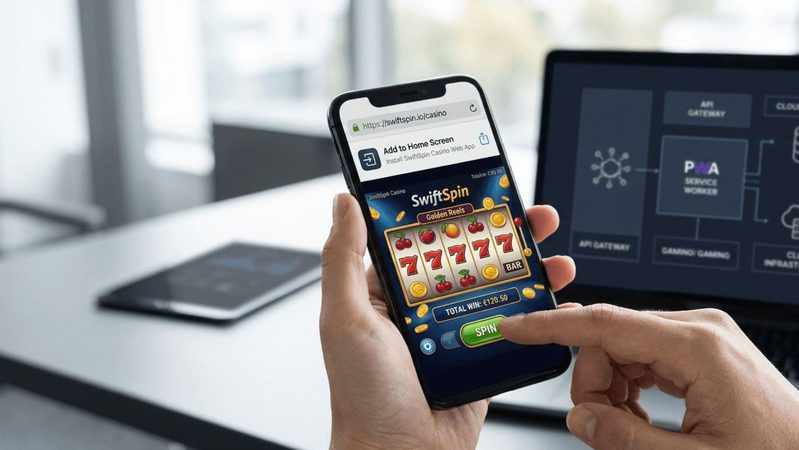
Technology has reshaped the global gaming landscape in profound ways, influencing everything from game development and distribution to player behaviour and community engagement. What started as a primarily consolebased industry has expanded into one of the world’s largest entertainment ecosystems, powered by artificial intelligence, cloud computing, highpowered hardware, and immersive software platforms. Today, gaming spans mobile devices, VR headsets, portable consoles, cloud platforms and even casual webbased environments such as bingo sites, all benefiting from technological leaps. Below is a comprehensive look at the key ways technology has transformed gaming across multiple dimensions.‑based industry has expanded into one of the world’s largest entertainment ecosystems, powered by artificial intelligence, cloud computing, high‑powered hardware, and immersive software platforms. Today, gaming spans mobile devices, VR headsets, portable consoles, cloud platforms and even casual web‑based environments such as
Artificial Intelligence Has Revolutionised Game Development
Artificial intelligence has become one of the most impactful technological breakthroughs in modern gaming. According to industry reports, AI-driven systems are now reshaping game creation, content generation and live operations, enabling dynamic environments, personalised narratives and real-time difficulty balancing.
Generative AI allows developers to:
- Build more realistic NPC behaviour
- Create adaptive stories based on player choices
- Speed up asset creation, localisation and testing
Research shows that 97% of developers now use AI tools to accelerate design and production processes.
This transformation reduces costs and production cycles while expanding creative possibilities—something that would have been impossible even a decade ago.
Cloud Gaming Has Lowered Barriers to Entry
Cloud technology has redefined where and how people play. It enables players to stream high-quality games without requiring expensive hardware. Reports note that cloud gaming is eliminating the need for powerful local devices, making AAA games accessible on mobile phones, tablets and low-spec laptops.
Cloud gaming innovations allow:
- Instant game access
- Crossplatform progression syncingplatform progression syncing‑platform progression syncing
- Reduced patching and installation time
- Portable, play-anywhere experiences
These features have expanded the gaming market globally, bringing highend gaming capabilities to audiences who previously lacked access to consoles or gaming PCs.‑end gaming capabilities to audiences who previously lacked access to consoles or gaming PCs.
VR and AR Have Delivered New Forms of Immersive Play
Virtual reality (VR) and augmented reality (AR) have evolved from niche curiosities into mainstream gaming technologies. Industry findings show that VR/AR platforms are becoming commercially viable, supported by lighter, more affordable headsets, higher graphical fidelity and haptic feedback systems.
Examples of technological impacts include:
- Haptic suits and controllers that simulate touch and physical resistance
- Mixed-reality environments for cooperative games and social experiences
- Real-time motion tracking for fully immersive gameplay
This leap in immersion has opened the door to new game genres, training simulations and social virtual worlds.
Mobile Technology Has Become a Dominant Gaming Platform
Mobile gaming represents nearly half of all global gaming revenue, marking it the most influential platform category today. Market reports estimate that mobile gaming alone accounts for 46–49% of the industry, generating around $130 billion annually.
Advancements such as 5G connectivity, dedicated mobile GPUs and mobileoptimised engines have made mobile devices capable of running complex games. This evolution has also strengthened casual gaming sectors—including puzzle games, casinostyle formats and modern bingo sites—by giving players instant, portable access to digital entertainment.
CrossPlatform Gaming Has Unified Player CommunitiesPlatform Gaming Has Unified Player Communities‑Platform Gaming Has Unified Player Communities
Crossplatform and crossprogression technologies have simplified the player experience by allowing gamers to play seamlessly across devices. This shift is supported by cloud saves and shared online ecosystems, letting players switch between console, PC, and mobile without losing progress.Reports emphasise that gaming is no longer tied to fixed consoles, with hybrid and portable platforms gaining momentum.
This interoperability has strengthened communities, increased engagement and expanded the industry’s reach across demographics.
Creator Driven Ecosystems and User Generated Content Are Thriving‑Driven Ecosystems and User‑Generated Content Are Thriving
Technology has also empowered creators, influencers and players to participate directly in game ecosystems. Platforms such as TikTok, Twitch and YouTube now play a central role in game discovery and engagement, surpassing traditional advertising channels.
Usergenerated content (UGC) tools integrated into engines such as Unreal and Unity allow players to design levels, characters and even entire worlds. Titles like Roblox and Minecraft demonstrate how community creativity can drive long-term success and revenue.‑generated content (UGC) tools integrated into engines such as Unreal and Unity allow players to design levels, characters and even entire worlds. Titles like Roblox and Minecraft demonstrate how community creativity can drive long-term success and revenue.
Monetisation Models Have Shifted Toward Transparency and Trust
Technology has also reshaped monetisation. Instead of relying heavily on single-purchase games or paytowin mechanics, developers increasingly use.‑to‑win mechanics, developers increasingly use:
- Value-based battle passes
- Subscription models
- Cosmetic-only microtransactions
Industry reports highlight that evolving expectations around fairness, transparency and player safety are driving these changes.
Additionally, secure digital payments and improved compliance technology support safer, more trustworthy gaming transactions—benefiting all types of platforms, from VR systems to casual environments like online bingo sites.
Regulatory Technology and Responsible Gaming Frameworks Have Advanced
Governments are paying closer attention to gaming, leading to new regulatory standards around transparency, loot boxes, AI use and user protection. Reports note that regulators are increasing oversight and redefining rules, requiring platforms to integrate safer monetisation and clearer consent systems.
As technology improves, compliance tools—including identity verification, age checks and AIdriven risk monitoring—have become sophisticated pillars of modern gaming.‑driven risk monitoring—have become sophisticated pillars of modern gaming.
Technology has redefined gaming across every dimension—from game development and distribution to immersion, payment security and community building. Advances in AI, cloud computing, VR/AR, mobile hardware and crossplatform ecosystems have not only expanded global participation but also reshaped expectations for interactivity, fairness and narrative depth. Even casual gaming sectors, including bingo sites, have benefitted from innovations such as mobile optimisation, secure payments and social chat integration. As technology continues to evolve, gaming will remain one of the most adaptive and innovative forms of digital entertainment worldwide.‑platform ecosystems have not only expanded global participation but also reshaped expectations for interactivity, fairness and narrative depth.