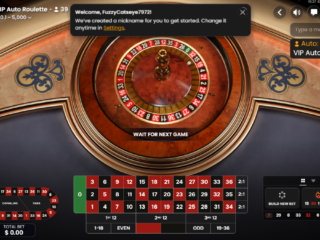
Online entertainment software relies on complex mathematical algorithms and cryptographic frameworks to maintain fair, unmanipulated outcomes. In tech-savvy markets across Southeast Asia, including Malaysia’s digital hubs in Kuala Lumpur and Penang, users increasingly inspect the underlying code, encryption protocols, and auditing standards of interactive platforms like Lucky Star Casino. Understanding how Random Number Generators (RNGs) operate and how cryptographic “Provably Fair” mechanisms function provides a clear technical window into modern digital gaming architecture.
PRNGs vs. Quantum Hardware: The Engine of Randomness
At the core of software-based gaming is the continuous generation of unpredictable numerical sequences. Software developers employ two primary architectural approaches to produce random outcomes:
· Pseudorandom Number Generators (PRNG): Mathematical algorithms like the Mersenne Twister generate long, statistically independent sequences of numbers derived from an initial seed value. While technically deterministic if the seed is known, certified PRNGs utilize high-precision hardware timers as continuous seeds, making output sequences computationally impossible to predict during live sessions.
· Hardware / Quantum Random Number Generators (TRNG): Advanced software integrations utilize physical entropy sources rather than software algorithms alone. For example, Smartsoft’s crash game JetX integrates hardware-level quantum RNG technology certified by ID Quantique (IDQ). By measuring physical quantum photon fluctuations, IDQ hardware outputs absolute, non-deterministic randomness that cannot be influenced by external software variables.
Cryptographic Transparency: The Provably Fair Protocol
While traditional PRNGs rely on closed-source server execution, instant crash games—such as 1win Games’ flagship title Lucky Jet (featuring a published 97% RTP) or Rocket Queen—utilize open-source cryptographic protocols known as Provably Fair.

The Provably Fair framework relies on a three-part cryptographic seed structure:
1. Server Seed: Prior to the start of a round, the platform’s server generates a secret random seed and publishes its encrypted SHA-256 hash. Because the hash is publicly visible before wagers are placed, the operator cannot alter the outcome midway through the round.
2. Client Seed: The user’s browser or mobile application contributes its own client-side random string. This guarantees that the server alone cannot dictate the final multiplier.
3. Nonce & Combined Hash Calculation: An incrementing counter (nonce) tracks the exact round number. The algorithm merges the Server Seed, Client Seed, and Nonce, processing them through a SHA-256 hashing function to determine the precise crash coefficient.
Post-round, the plain-text Server Seed is unencrypted and displayed in the game interface. Any user can paste the Client Seed, Server Seed, and Nonce into an independent online SHA-256 calculator to verify that the unencrypted output matches the pre-round hash, providing direct mathematical proof that the outcome remained untampered with.
Independent Third-Party Audits and Testing Laboratories
Beyond individual cryptographic verification, reputable software studios submit their source code to independent testing laboratories. Regulatory bodies recognize international testing houses such as bmm testlabs, iTech Labs, eCOGRA, and Gaming Associates (GA).
These accredited laboratories conduct empirical code evaluations:
· Source Code Inspections: Auditors examine backend scripts to verify that no hidden functions alter probabilities based on bet size, user balance, or session history.
· RTP Verification: Automated testing systems execute millions of simulated rounds to confirm that observed returns match published parameters—such as the default 94.00% RTP in Pragmatic Play’s Gates of Olympus 1000.
· Statistical Distribution Tests: Datasets undergo Chi-Square and Diehard statistical battery tests to ensure symbol distributions show zero correlation or pattern bias over time.
By combining cryptographic SHA-256 verification with independent laboratory certifications, modern digital gaming platforms replace subjective trust with verifiable mathematical integrity.