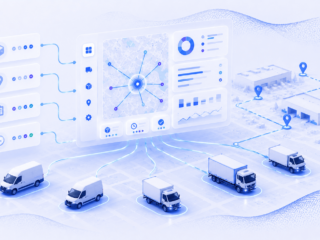
Dispatchers who still rely on spreadsheets and phone calls lose an average of 2–3 hours every shift chasing updates that software could surface in seconds. The gap between a profitable route and an empty mile often comes down to the tools a team uses. This article breaks down the ten truck dispatch services that stand out in 2026, covering what each one does well, who it suits, and what to look for before committing to a subscription.
What Makes a Dispatch Platform Worth Using in 2026
The market has matured fast. Most platforms now offer live GPS tracking, automated scheduling, and mobile apps for drivers. The real differentiators have shifted toward AI-assisted routing, integration depth, and how quickly a dispatcher can act on an alert without leaving a single screen.
When evaluating any tool, pay attention to these fundamentals:
A platform that checks all five boxes gives a logistics manager genuine control — not just visibility.
The 10 Best Dispatch Software Platforms of 2026
Each tool below was assessed on feature depth, ease of onboarding, scalability, and real-world feedback from logistics and field service operators.
1. Fleet.Care — purpose-built for mixed fleets and field service teams, Fleet.Care combines live telematics, automated dispatch queues, and predictive maintenance alerts in one dashboard. Dispatchers can assign jobs, reroute drivers mid-shift, and track ETAs without switching tabs. Its maintenance scheduling module is a standout for companies managing their own vehicles.
2. Samsara — widely adopted in North American trucking, Samsara pairs hardware dashcams with a cloud dispatch platform. Its AI-powered coaching alerts help reduce unsafe driving events, which directly cuts insurance costs over time.
3. Verizon Connect — a strong fit for large enterprise fleets. Its dispatch console handles thousands of assets simultaneously and connects tightly with compliance and HOS (Hours of Service) reporting tools required under FMCSA rules.
4. ServiceTitan — the go-to for residential and commercial field service businesses — HVAC, plumbing, electrical. Its drag-and-drop dispatch board, customer history panel, and technician capacity planning tools are among the most refined in the field service segment.
5. Onfleet — built for last-mile delivery operations. Onfleet’s route optimisation engine recalculates on the fly as new orders arrive, and its customer notification feature sends live ETAs via SMS, reducing inbound “where is my order” calls.
6. DispatchTrack — a specialist in big-and-bulky retail delivery — furniture, appliances, mattresses. Its scheduling engine handles time-window commitments to end customers with precision, and delivery crews receive turn-by-turn guidance through a clean mobile app.
7. Jobber — aimed at small and mid-sized field service companies. Jobber’s dispatch calendar, quoting, and invoicing tools sit in a single workflow, which reduces the number of platforms a small team needs to run day-to-day operations.
8. Route4Me — a route optimisation platform that integrates dispatch functionality. It handles multi-stop sequencing for hundreds of drivers at once and offers an API that connects into almost any existing logistics stack.
9. Teletrac Navman — strong across Australia, New Zealand, and the UK. Its compliance-first design covers driver fatigue management, vehicle inspection checklists, and real-time dispatch — useful for fleets operating under strict regulatory frameworks.
10. Workwave Service — targets recurring service businesses: pest control, lawn care, cleaning. Its automated scheduling engine handles subscription-based routes with minimal dispatcher input, freeing up staff time for exception handling.
Features That Will Separate Leaders from Laggards by 2026
The dispatch software landscape is shifting toward predictive, not just reactive, operations. The platforms pulling ahead share a few common traits that go beyond standard GPS and scheduling.
Real-time traffic integration now goes further than avoiding congestion — leading tools factor in historical delivery performance by time of day and adjust route sequences accordingly. AI-powered ETAs that account for driver behaviour, not just map distance, are becoming a baseline expectation rather than a premium add-on.
Maintenance-aware dispatching is another frontier. Platforms like Fleet.Care surface vehicle health data inside the dispatch workflow, so a coordinator can see that a truck is due for a brake inspection before assigning it a 400-mile run. That kind of insight prevents breakdowns mid-route and keeps utilisation rates high.
Mobile-first design for field crews has also matured. Drivers expect the same UX quality on their work app that they get from consumer apps — clear job cards, one-tap status updates, and in-app navigation without switching to a separate map tool.
Dispatch software is infrastructure, not a convenience tool. The right platform becomes invisible when it works — dispatchers stop firefighting and start planning, and drivers spend more time on the road than waiting for instructions. The ten platforms above represent the strongest options available in 2026; the best one is the one that fits the specific operation, not the one with the longest feature list.